

Supporting Londoners living with frailty and dementia
“It is really exciting that for the first time there is a sharable care plan to support people living with frailty and dementia across London.”
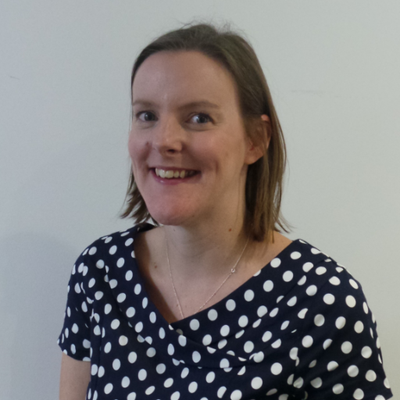
In our latest Meet Team OneLondon feature we are delighted to introduce Laura Cook who is the Ageing Well Programme Lead for the London Clinical Networks. Laura has a vital role ensuring the expanded Universal Care Plan works effectively for Londoners living with frailty or dementia (13 March 2025).
What is your role?
I am the Ageing Well Programme Lead for the London Clinical Networks at NHS England London Region and work on various improvement projects with a focus on frailty, dementia and end of life care.
Prior to this I was a physiotherapist specialising in care and rehabilitation for older people.
A bit about me… I am kept busy at home with Sophie who is 3 and Thomas who is 18 months. When not working or with the children you can find me at Selhurst Park watching Palace or enjoying a nice glass of wine.
What work are you doing with the Universal Care Plan?
The Universal Care Plan (UCP) is an NHS service that enables every Londoner to have their care and support wishes digitally shared with healthcare professionals across the capital.
The UCP was originally focused to enable people to share wishes and preferences towards the end of their life. I have been working with the UCP team on the expanded care plan, which enables it to be used as a personalised care and support plan. The expanded care plan was launched in January 2025.
My focus on the care plan development was how it will support people living with frailty and dementia. We brought together clinicians and experts by experience to develop the expanded template so that it can effectively be used as personalised care and support plan. It includes areas such as what matters to the person, information about their activities of daily living such as if they need support to get washed and dressed and if they use a walking aid and their communication needs such whether they wear hearing aids or glasses.
Why is this important?
This means that for the first time there is a sharable care plan to support people living with frailty and dementia across London. People will be able to share their wishes and preferences and other important information so they can be supported in the best way possible.
It will also mean that the person can have one care plan that can be updated by different professionals. For example, someone with dementia could have a care plan started by a memory service, which is then reviewed and updated in primary care, and can also be reviewed and updated if they need to go into hospital. People can also view their own care plan through the NHS app.
Having a shareable care plan means that urgent care services will be able to access vital information, such as what is important to the person, how to support them in a crisis and other important information such as how to communicate with them. This will help people to receive personalised care and, if the person wants and is safe, can support them to stay at home to receive care and support rather than going into hospital.
The information on shareable care plans will mean that people do not have to keep repeating their story and can save clinicians time as they will have really useful information at their fingertips.
What is next?
We will be supporting services to use the new care plan by working with individual teams to implement the care plan in practice and sharing the learning through our clinical networks. We are also excited that people will soon be able to add to their own care plan through the NHS app.
My next project is to work with the UCP team to prototype a digital Comprehensive Geriatric Assessment (CGA) on the platform. A CGA is a multidimensional holistic assessment of an older person’s health and wellbeing to address any issues which are of concern to the older person (and their family and carers when relevant).
This work is at an early stage and the first step is about developing a proof of concept. But having a CGA on the UCP platform would mean that clinicians could view previous assessments (even if they work in a different team or different hospital). Information from previous CGAs could be used to complete a new one, and information in the CGA could be used to create a personalised care and support plan (using auto-population where appropriate). This will help to reduce duplication of work and save time for clinicians.
I really enjoy my role in the Clinical Networks, and I am really excited about the new developments in the UCP which will support clinicians and people living with dementia, frailty and other long-term conditions to develop meaningful personalised care and support plans.
You can find out more about the Universal Care Plan including how to access it and learning resources here.